


Proteção auditiva
As ondas sonoras são muito prejudiciais para a sua audição. Proteja-se e descubra a nossa proteção auditiva Delta Plus, com garantia de qualidade e fiabilidade.


As ondas sonoras são muito prejudiciais para a sua audição. Proteja-se e descubra a nossa proteção auditiva Delta Plus, com garantia de qualidade e fiabilidade.

O primeiro passo é entender o nível de ruído ao qual você está exposto, medido em decibéis (dB). Se o som ultrapassa constantemente 85 dB, é essencial utilizar proteção auditiva, pois a exposição prolongada pode causar perda de audição. Medidores de som podem ajudar a determinar com precisão o nível de ruído no ambiente de trabalho.
O tipo de ruído também influencia na escolha do protetor auditivo. Ruídos contínuos, como o funcionamento de máquinas, exigem uma proteção diferente de ruídos intermitentes ou de impacto, como marteladas ou explosões.
Outro fator importante é o Índice de Redução de Ruído (NRR), que indica a capacidade do protetor de atenuar o som. Quanto maior o NRR, maior a proteção contra o ruído.
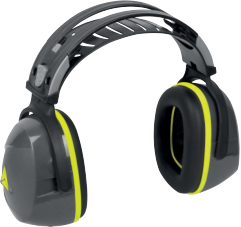
Além disso, conforto e praticidade são essenciais. Protetores que não se ajustam bem ou causam desconforto tendem a ser usados de forma inadequada ou até negligenciados. Opções como protetores moldáveis ou abafadores ajustáveis garantem um encaixe mais eficiente.
Por fim, considere o ambiente e a natureza do trabalho. Em locais quentes e de alta atividade, os protetores auriculares podem ser mais indicados por não reterem calor. Já os abafadores são mais adequados para ambientes frios ou funções que exigem remoção e colocação frequentes da proteção.
Em resumo, ao escolher a proteção auditiva ideal, leve em conta o nível de ruído do ambiente, o tipo de som, o NRR do protetor, o conforto e as condições de trabalho.

There's a diverse range of hearing protection devices designed to safeguard your auditory health. Here are some of the most common types:
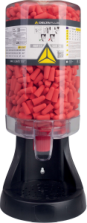
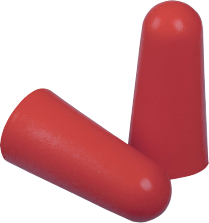
Earplugs are small devices that fit directly into the ear canal. They come in a variety of materials, from foam and silicone to custom molded options.
Foam Earplugs are disposable, cost-effective, and offer substantial noise reduction. They are compressed before insertion, expanding to fit the ear canal.
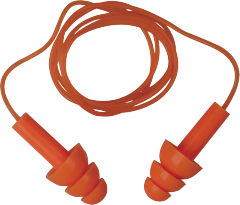
Silicone and Flanged Earplugs are reusable and typically more durable than foam plugs. They often have a flanged design to create a seal against the canal wall.
Molded Earplugs are custom-made to fit the wearer's ear, offering comfort and effective noise reduction. They are typically more expensive, but their durability makes them a worthwhile investment.
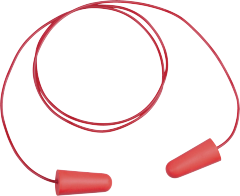
Corded Earplugs are attached with a cord to prevent loss and allow for easy removal and reinsertion.
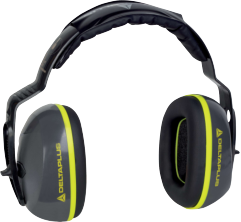
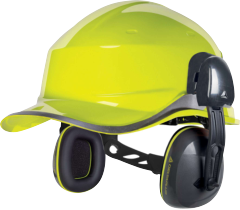
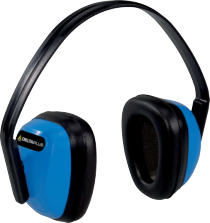
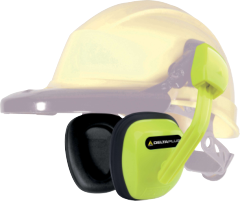
Earmuffs cover the entire outer ear and form a seal to block out noise. They are adjustable and typically offer higher levels of protection than earplugs. However, they can be hotter and more cumbersome.
Standard Earmuffs provide ample noise reduction and are easy to put on and take off, making them suitable for situations where noise exposure is intermittent.
Electronic Earmuffs amplify quiet sounds while reducing loud ones, making them ideal for situations where communication or hearing certain sounds is important.
Ultimately, the type of hearing protection chosen will depend on the nature of the noise, the duration of exposure, the Noise Reduction Rating (NRR) needed, and the user's comfort.

Hearing protection is an essential part of personal safety equipment, particularly in environments where noise levels exceed safe thresholds. But why is it so crucial?
Noise-induced hearing loss (NIHL) is a significant occupational hazard, often resulting from prolonged exposure to high noise levels. It is a gradual and cumulative process, with the potential damage going unnoticed until it's too late. Unfortunately, once damaged, our hearing doesn't recover.
Wearing hearing protection helps to prevent NIHL by reducing (attenuating) the amount of noise that reaches the eardrums. This protection is crucial in high-noise environments, such as construction sites, factories, airports, or even certain recreational activities.
Moreover, adequate hearing protection can help prevent tinnitus, a constant ringing or buzzing in the ears often associated with noise exposure. Tinnitus can be a debilitating condition, causing sleep disturbances and concentration problems.
Beyond safeguarding your hearing health, appropriate ear protection can also increase concentration by reducing the distraction from background noise. This can enhance productivity and reduce the likelihood of accidents due to distraction.
In summary, wearing hearing protection is an essential measure to prevent long-term hearing damage, enhance concentration, and maintain overall well-being in noisy environments.