







Nowe produkty


Drabina klatkowa

Training

Nasza historia
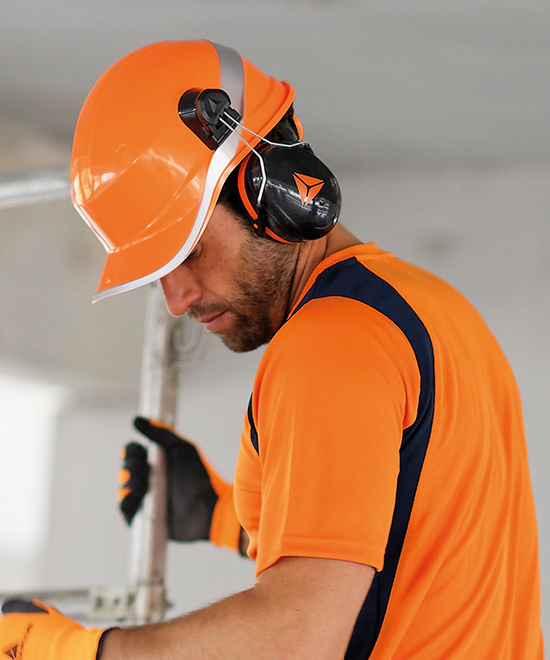
In numerous professional and hazardous settings, the importance of head protection can't be overstated. This crucial aspect of safety is not only a matter of occupational health but also a matter of personal wellbeing. Your head houses essential organs, including the brain and eyes - the command centre of your body. Any damage inflicted can result in severe, often irreversible, consequences, impairing senses, and even leading to life-threatening injuries.
The necessity for head protection becomes more acute in environments like construction sites, manufacturing units, and utility services, where potential hazards like falling objects, flying debris, and accidental impact are commonplace. Furthermore, specific job roles such as welding or tasks involving exposure to harmful substances demand adequate headgear for protection against sparks, heat, chemical splashes, and hazardous airborne particles.
The necessity for robust head protection extends beyond mere compliance with safety standards such as those set by OSHA. It is about safeguarding workers, ensuring their safety, and promoting a healthy working environment. Therefore, head protection becomes an integral component of personal protective equipment (PPE).
Fall protection equipment, a subset of Personal Protective Equipment (PPE), is designed to protect workers from fall hazards while performing tasks at heights. The primary goal of fall protection equipment is to minimize the risk of fall incidents and reduce the potential for serious injuries.
Fall protection equipment, also known as fall-protection, encompasses three major types - fall arrest, fall restraint, and positioning.
Fall arrest systems, comprising harnesses, lanyards, and absorbers, are used to stop a fall in progress. When a fall occurs, the fall-arrest system "catches" the worker, decelerating their descent and absorbing the forces to minimize injury.
Fall restraint systems, on the other hand, are designed to prevent a fall from occurring in the first place. They restrict the movement of workers to areas where fall hazards are non-existent or significantly minimized. Components like a body harness and restraint lanyard are used in these systems.
Positioning equipment, including positioning lanyards and webbing, secure a worker to a structure in a way that allows hands-free work.
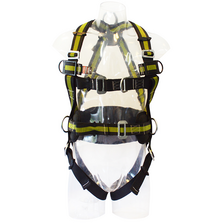
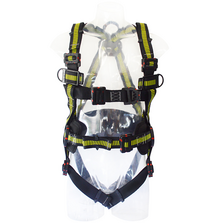
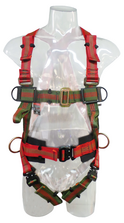
Central to these systems is the full body harness. A full body harness is designed to distribute the force exerted during a fall across the worker's body, thus reducing the chance of injury. It's a harness that encompasses the torso and the lower body, providing support and safety.
Other types of fall protection systems include guardrails, safety nets, ladder safety systems, and personal fall arrest systems. These systems work by providing a physical barrier to prevent falls, or by limiting the distance of a fall.
All these components and systems, when used correctly under the supervision of a competent person, as defined by OSHA, can significantly reduce the risk of serious injuries or fatalities from falls. A competent person is someone capable of identifying hazards and has the authority to take prompt corrective measures.
With the essence of what fall protection equipment is covered, let's explore why having this equipment at work is crucial.

Selecting the appropriate head protection is a process that involves understanding the risks associated with a particular task or environment, and the level of protection needed to mitigate these hazards effectively. Here's a guide to help you make an informed choice:
Evaluate the hazards: The first step is to evaluate the risks present in the working environment. This could be falling or flying objects, potential for head bumps, harmful airborne particulates, or exposure to harmful noise levels. An effective hazard assessment can be instrumental in determining what type of headgear is necessary.
Understand the regulations: Ensure you're aware of all the relevant safety regulations in your industry, including those set by bodies like OSHA. Compliance with these standards is not only mandatory but also guarantees a certain level of safety and protection.
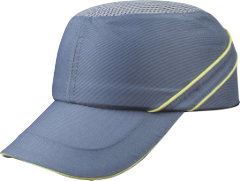
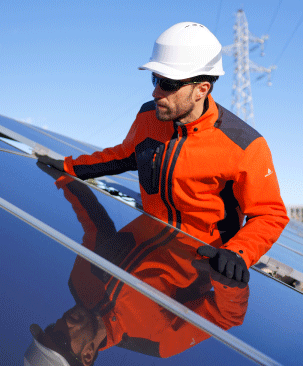
Choose the right type of gear: Depending on the hazards identified, select the appropriate type of head protection. This could range from safety helmets or hard hats for impact protection, safety glasses or goggles for eye protection, earplugs or earmuffs for hearing protection, or respirators for respiratory protection.
Check the fit: It's crucial that the headgear fits the wearer correctly. A well-fitting helmet will stay in place even when the wearer is moving or bending down. For eyewear, ensure it fits well over the eyes and doesn't obstruct the vision. Ear protection should be comfortable yet provide a secure seal. And finally, respirators should form a tight seal around the nose and mouth to ensure effective filtration.