








Novos produtos


Escada com gaiola

Formação

A nossa história
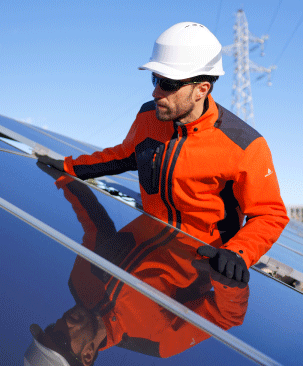
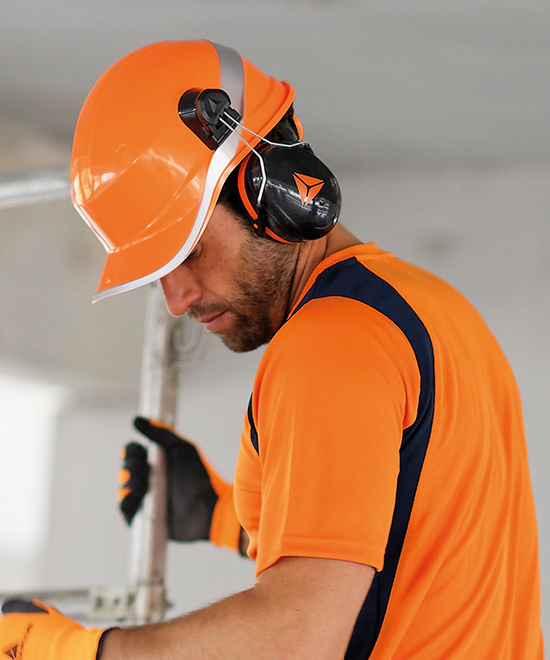
In numerous professional and hazardous settings, the importance of head protection can't be overstated. This crucial aspect of safety is not only a matter of occupational health but also a matter of personal wellbeing. Your head houses essential organs, including the brain and eyes - the command centre of your body. Any damage inflicted can result in severe, often irreversible, consequences, impairing senses, and even leading to life-threatening injuries.
The necessity for head protection becomes more acute in environments like construction sites, manufacturing units, and utility services, where potential hazards like falling objects, flying debris, and accidental impact are commonplace. Furthermore, specific job roles such as welding or tasks involving exposure to harmful substances demand adequate headgear for protection against sparks, heat, chemical splashes, and hazardous airborne particles.
The necessity for robust head protection extends beyond mere compliance with safety standards such as those set by OSHA. It is about safeguarding workers, ensuring their safety, and promoting a healthy working environment. Therefore, head protection becomes an integral component of personal protective equipment (PPE).
Fall protection equipment, a subset of Personal Protective Equipment (PPE), is designed to protect workers from fall hazards while performing tasks at heights. The primary goal of fall protection equipment is to minimize the risk of fall incidents and reduce the potential for serious injuries.
Fall protection equipment, also known as fall-protection, encompasses three major types - fall arrest, fall restraint, and positioning.
Fall arrest systems, comprising harnesses, lanyards, and absorbers, are used to stop a fall in progress. When a fall occurs, the fall-arrest system "catches" the worker, decelerating their descent and absorbing the forces to minimize injury.
Fall restraint systems, on the other hand, are designed to prevent a fall from occurring in the first place. They restrict the movement of workers to areas where fall hazards are non-existent or significantly minimized. Components like a body harness and restraint lanyard are used in these systems.
Positioning equipment, including positioning lanyards and webbing, secure a worker to a structure in a way that allows hands-free work.
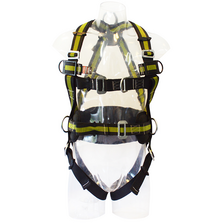
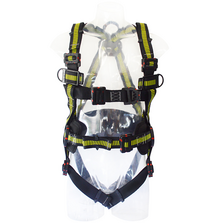
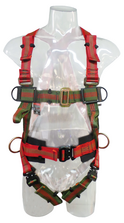
Central to these systems is the full body harness. A full body harness is designed to distribute the force exerted during a fall across the worker's body, thus reducing the chance of injury. It's a harness that encompasses the torso and the lower body, providing support and safety.
Other types of fall protection systems include guardrails, safety nets, ladder safety systems, and personal fall arrest systems. These systems work by providing a physical barrier to prevent falls, or by limiting the distance of a fall.
All these components and systems, when used correctly under the supervision of a competent person, as defined by OSHA, can significantly reduce the risk of serious injuries or fatalities from falls. A competent person is someone capable of identifying hazards and has the authority to take prompt corrective measures.
With the essence of what fall protection equipment is covered, let's explore why having this equipment at work is crucial.

O primeiro passo é identificar os perigos presentes no ambiente. Isso pode incluir quedas de objetos, risco de impactos, partículas suspensas no ar ou exposição a ruídos intensos. Uma avaliação detalhada dos riscos ajudará a definir qual tipo de proteção é necessário.
Certifique-se de estar em conformidade com as regulamentações de segurança aplicáveis ao seu setor, como as normas estabelecidas pela NR-6 no Brasil. O cumprimento dessas diretrizes garante que os equipamentos ofereçam o nível de proteção exigido.
Com base nos riscos identificados, selecione a proteção mais adequada. Isso pode incluir capacetes de segurança para proteção contra impactos, óculos ou viseiras para resguardar os olhos, protetores auriculares para reduzir ruídos excessivos ou respiradores para garantir a proteção contra partículas e vapores nocivos.
O EPI deve se ajustar corretamente ao usuário para garantir conforto e eficácia. Um capacete bem ajustado permanecerá firme na cabeça, óculos de proteção não devem prejudicar a visão, protetores auriculares precisam formar um selo adequado e respiradores devem vedar corretamente o nariz e a boca para garantir a filtragem eficiente.