#

Bevestiging / werkpositionering

#
Filtres 32 resultaten
Filter
header
Productcategorie
Valbescherming
Bevestiging / werkpositionering
Sector
Landbouw Bosbouw Visserij
Bouw
Nutsbedrijven - Energie
Productie-industrie
Olie & gas (winning) Petrochemie Mijnbouw
Transport Opslag
Soort uitrusting
Werksituaties met valbeveiliging
Lengte (m)

What is a lanyard?

A lanyard is a versatile and functional accessory used across many industries and scenarios. In its most basic form, a lanyard is a strap or cord often worn around the neck or wrist to carry something. While commonly associated with badges, ID cards, and keys, lanyards also play a vital role in fall protection systems.

In the context of safety and fall protection, a lanyard is a flexible line of rope, wire rope, or strap typically attached to the D-ring of a worker's safety harness. On the other end, it can be connected to a lifeline, deceleration device, or anchorage point. The primary purpose of safety lanyards is to arrest falls, preventing workers from descending completely or limiting the force of the fall.

These safety lanyards come in different forms to serve various purposes. You can find single lanyards, double lanyards, adjustable lanyards, and even retractable lanyards in the market. In addition to their vital role in fall-arrest systems, lanyards are also used for positioning, restraint, and rescue.

While their application in fall protection is critical, lanyards are also ubiquitous in everyday scenarios. You can find them used in events, offices, schools, and organizations to hold ID cards, badges, and keys. Custom lanyards printed with a logo or brand name have become a popular promotional tool, adding visibility and marketing value to an otherwise practical item.

Whether it's a badge reel for an ID-card, a breakaway lanyard for a name badge, or a nylon lanyard with a carabiner for a photo ID, there are countless options available to suit various needs.

In the next section, we'll dive into how to use a lanyard effectively, but first, let's focus on understanding its many applications and variations.

How do you use a lanyard?

In the context of fall protection, the use of a lanyard requires great caution. The lanyard should be attached to the D-ring of a worker's safety harness, with the other end connected to an anchorage point, lifeline, or deceleration device. This connection helps to arrest a fall and prevent the worker from hitting the ground or a lower level.

Safety lanyards must be used in conjunction with other components of a fall protection system. For instance, a retractable lanyard (or self-retracting lifeline) can automatically arrest a fall while allowing freedom of movement when tension is not applied to the lifeline.

Regardless of the application, using a lanyard effectively also means regular inspections for wear and tear, especially for safety lanyards. All components, including the webbing, connectors, and attachment points, should be in good condition to ensure safety.

What are the different types of lanyards?

Lanyards come in an array of designs to cater to a wide variety of purposes. Broadly, they can be categorized based on the number of attachments they have, their material, and their specific features or uses.

Single Lanyard

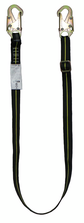
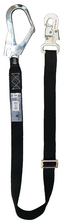
A single lanyard is a type of safety lanyard that has a single leg, meaning it has an attachment point at each end. One end connects to the worker's full body harness, usually to the D-ring at the back, while the other end connects to an anchorage point or a lifeline. Single lanyards are typically used when the user will remain at the same height and move along the same plane.

In the context of ID badges or keys, a single lanyard is a straightforward design that holds the item securely and allows for easy access.

Double Lanyard

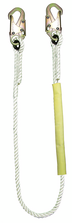
Double lanyards, also known as twin or Y-lanyards, have two legs connected to a single carabiner. In a fall protection system, this design allows the user to maintain connection while moving between anchorage points, ensuring continuous protection. This technique is often referred to as "100% tie-off" and is particularly beneficial in situations where the worker needs to traverse areas without a horizontal lifeline in place.

The type of lanyard suitable for you depends on your specific needs. Whether it's a simple nylon lanyard for your ID-card, a custom printed lanyard for a corporate event, or a complex fall-arrest lanyard for work at height, understanding the functionality of different types of lanyards will help you make the right choice.

Example Text

Example Rich Text