









The ABCs of Personal Fall Protection Systems
Understanding the basic components of a personal fall-protection system can help workers and safety professionals make informed decisions when working at height.


Formation

Notre histoire
Understanding the basic components of a personal fall-protection system can help workers and safety professionals make informed decisions when working at height.
Understanding the basic components of a personal fall-protection system can help workers and safety professionals make informed decisions when working at height.
Expertise
Mise à jour le : 09/09/26 19:50
Working at height can present serious fall hazards. When there is a risk of falling, appropriate fall-protection measures should be considered based on the work environment, the task being performed, and the equipment being used.
Where possible, hazards should be addressed through measures that help prevent falls. When personal fall protection is necessary, the right equipment should be selected for the application and used according to the manufacturer's instructions.

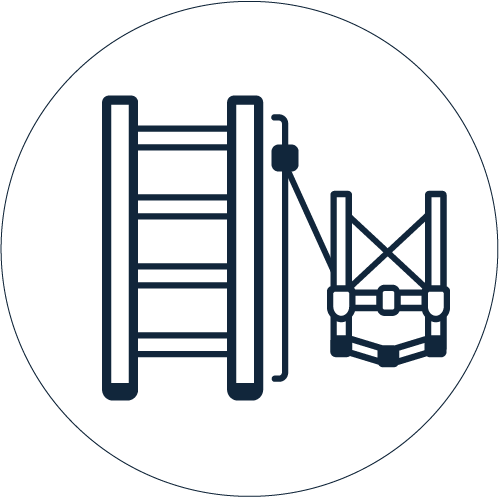
A personal fall-protection system brings several components together to help protect a worker when working at height. These components can be broadly understood as Anchorage, Body Support, and Connection.
A — Anchorage
The anchorage is the point or system where the fall-protection equipment connects to a suitable structure.
Anchorage equipment can vary depending on the work environment and application. It is important to use equipment that is appropriate for the intended application and compatible with the rest of the fall-protection system.
B — Body Support
A full-body harness is worn by the worker and forms an important part of a personal fall-protection system.
The harness is designed to provide support and help distribute forces through the body when used as part of an appropriate fall-protection system. Proper fit and adjustment are important for effective use.
C — Connection
Connecting components link the worker's harness to the anchorage. Depending on the application, these can include lanyards, energy absorbers, self-retracting devices, lifelines, and other compatible equipment.
The appropriate connection method depends on the type of work being performed and the overall fall-protection system.

Effective fall protection depends on the components working together as a complete system. Anchorage, body support, and connecting equipment should be selected for the specific application and used as intended by the manufacturer.
Workers should also receive appropriate training and understand how to properly inspect, wear, use, and care for their fall-protection equipment.


Understanding the basic elements of personal fall protection is an important part of working safely at height. By recognizing the roles of anchorage, body support, and connecting equipment, workers can better understand how these components work together as part of a complete fall-protection system.
Always select equipment appropriate for the application and follow the manufacturer's instructions and applicable workplace requirements.


